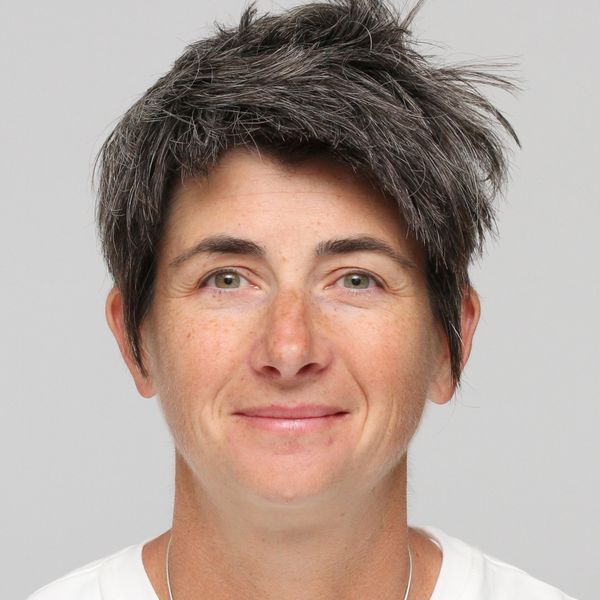
Dr Poppie Johnson
I write books for smart people with great ideas. Ghostwriter of memoirs and company histories / PhD in creative writing, University of Sydney
About
Most of my books start with someone saying, “I’m not sure anyone would want to read this,” or “Funny you should ask, a few people have told me that I should write a book.” Then we get to know each other and they tell me about the time the bank called in the loan, or the patent that took them three years to get and transformed their business, or the winter they lost half the flock. Sometimes the story starts with the day they walked out of a job everyone else would have killed for. That conversation is where the gold of the book lies. For the first three months we talk, an hour or two at a time, on video if you’re in Texas and I’m in Christchurch, or on your deck or at your favourite location if you’re closer. That usually comes to twenty-odd interviews, 30 to 90 hours all up, every minute of it transcribed. I’ll also talk to your family, your business partner and the friend who was there when it all went sideways, because they remember the bits you’ve tidied up. For one station history that meant driving the world’s second most dangerous road twice (cars aren’t insured on it), riding a horse, and flying into remote places in small planes. Other times it means going to a different city. Both are fun. After we talk, you get a break for a while and I write. You get the first chapter or two early so we can both hear whether it sounds like you (it will, and if it doesn’t, you’ll tell me and we’ll fix it), then a chapter or more every month. I’m a runner, and the second half of a book goes the way the second half of a marathon does, faster than you’d expect and slightly delirious by the end. You get three rounds of review and two professional copy edits, and about twelve months after we first sit down you have a manuscript. If you want it printed, I’ll run the design, photography and print too, with the same team every time. I do my best work for people who’ve built something (a company, a farm, a family), who’ll laugh at themselves, tell me the parts they’d rather leave out, and don’t mind if the swearing stays in. There really isn’t much room for standing on ceremony, and a good working relationship translates to a brilliant book. Before writing books, I taught secondary school English for twelve years and wrote features as a contributing writer for current affairs publications. In 2024 I finished my PhD in creative writing at the University of Sydney, where my research looked at the intersection of autofiction and trauma and explored how people write about their own lives. I’d love to meet. (And if you're from America, I lived there for many years and my Dad is from California by way of a Chicago birth so we'll get on just fine).
- Location
- New Zealand
- Experience
- 10 years
- Listed
- November 2026
- Categories
- Memoir or autobiography · Business or leadership book · Narrative nonfiction · Health and wellness · Book proposal
- Specialties
- Adventure, History, Memoir, Running, Exploration, Mindset, Land History
- Languages
- English
- Range
- $85,000 – $160,000
- References
- Available on request
—
0 contracts paid in full
This number is built only from contracts paid start to finish through Notable Authors. Nothing self-reported is counted. The clients behind it are real and anonymous: a redaction bar sits where each name would be. How that works →
Services
Full-length Memoir
From $85,000A memoir written in your voice, in the first person, for the readers who matter to you, whether that's your family, your industry or a bookshop shelf. I build it from our interviews and from your own records, the letters, emails, photographs and diaries, so the book sounds like you talking and every name, date and figure in it has been checked.
Typical turnaround By arrangement
Corporate History or Business Memoir
From $95,000The story of building a company, usually told by the person who built it or their descendants, for clients, staff, investors and shareholders. The commercial detail sits alongside the personal story, so I work from your financials, board papers and correspondence as well as our interviews. These books are often written to commemorate significant anniversaries or milestones and provide a high quality memento.
Typical turnaround By arrangement
The record
What this proves →Nothing here yet, and nothing on any profile yet. This site is new. A record appears when a whole book has been written and paid for through it, so the first ones are months away.
Writing samples
The writer’s own material, published exactly as written.
The Branches:Narrative nonfiction · Chapter: Ian Leadley, 1991 to the present · 1,926 words of 70,000 · 8 min read
When the rock moved, it trapped Ian Leadley’s leg instantly. It was a boulder, several tonnes forced onto his leg and body by the relentless pressure of the water and by its own immense weight. If Ian reached a hand above his head, the tips of his fingers would meet the surface. But he was pressed to the river bed with his legs on the ground. On his knees, in a supplicant’s position, he was trapped.
Immersed in the freezing Shotover River, Ian had been underwater for over an hour. His air ran off a compressor on his dredge with its own separate motor. The dredge pump was smaller; if that shut off then his compressor motor would be next. He had maybe five or ten minutes of air left. Normal dives were two and a half hours. Any more than that and the cold began to seep into your bones, even with hot water pumped through the suit.
Ian was diving for gold. A German backpacker sat on the surface, manning the dredge, but she had little experience and he had no way of communicating with her. The boulder had been dislodged by the current and came down on top of his legs as he moved some of the shingle in front of it. Even if he could signal his backpacking assistant up top, Ian knew she might shut off the wrong motor and leave him without air. He recounts the moment calmly, but the tension hovers beneath the surface. “When you realise you’re trapped, you start to hyperventilate. You can’t get enough air. You puff hard because you’re sucking on it harder and harder trying to get oxygen. I told myself to stop. Stop. If you don’t get enough air you’re going to bloody drown.”
Ian calmed himself, started breathing easily again and then assessed his situation. The river was flowing around him and no matter how hard he tried, his strength was no match for the force of the current. To this day, he doesn’t know quite what happened. “I pulled three times. I fought. I thought I was going to have to pull my leg off. In the end, it was as though someone had me and decided to let me go. It just wasn’t my time.”
The river shifted, and the vagaries of fate that trapped him were the same ones that let him go. After a break and a cup of hot tea, Ian was back down for his second dive of the day.
Finding the Flood Burn
For over thirty years, Ian has mined his claim on the Flood Burn River. He knows where the old terraces are, treads in the footsteps of earlier miners, and keeps David Hazeel’s old chimney standing guard on his gear shed.
On his way back in to set up for the summer season, Ian works through his checklist. His mud spattered flat-bed ute is loaded up with supplies and he stops on the way in to have a yarn with the Skippers jet-boat lads. They have an engineering workshop and are sorting out a new riffle on his dredge for summer.
It all began in 1990 when a friend, the late Alan Hamilton, suggested Ian try his luck mining above Ballarat Creek in the Flood Burn. In 1991, Ian came back. He had been working hard, farming and mustering, and had three kids. His marriage split up and he had a bad case of what he ironically calls ‘the sulks.’ He needed an adventure and he’d remembered the excitement of the previous year. As a boy, he always used to read hunting and adventure books and was taken with the great outdoors. Mustering took care of part of that hankering, but not all of it. There was a need for more, for a sense of exploring what lay beyond the horizon. The wilderness of The Branches appealed.
Over the next few summers, Ian flew into the Flood Burn to mine and would often bring his three boys on camping trips during the school holidays. What was supposed to be a couple of weeks of fun turned into a summer, and then into a year. “I’d never had an adventure like it. It answered that seeker’s question of what’s over that next mountain?”
River mining on the Flood Burn bears no resemblance to open-cast operations with their massive equipment. Ian works alone much of the time, at most with a partner or a backpacker who wants a true Kiwi experience for a couple of weeks.
In 1994, Ian purchased the Flood Burn claim from Aorere Mining along with his then-partner Cecilia Higgins. Since then, Ian has renewed and extended the lease, keeping it going for over 30 years. His claim goes from The Branches flats all the way up the Flood Burn to the Ballarat.
This land was mined by a commercial company in the 1980s, but mining here goes back much further. Duncan McNicol mentions in his memoirs that in May 1905, he went to muster the Flood Burn and the diversion channel, built by the Ward Brothers, was already operating at the mouth of the Flood Burn. According to the scant records that are available, the height of the gold rush saw a lot of men working the Flood Burn from Shingle Creek to Ballarat Creek. Ian suspects the old-timers piped much of that section dry, as it’s been well worked.
Home on Hazeel’s Terrace
The old Hazeel homestead site is where Ian’s gear shed stands now. For years only a stone wall and fireplace remained, so he built a shed against them for preservation. In 2020 a nasty westerly knocked over the trees at the rear, flattening the shed and chimney. Nothing could be saved. He built another shed and fireplace, though not to the original’s standard. On rainy days, or on non-mining days, he spends his time in the shed, fixing gear, getting ready for the next outing.
Home is a two-room hut that was put on Hazeel’s Terrace in 1987 by Aorere when they wanted to try their luck sluicing the terrace. A small bedroom sits to the right of the door; possum skins he has trapped and cured hang on hooks ready to be made into something on a rainy day. There is no power, no cellphone reception, but a radio powered from a car battery breaks the silence. Books, photographs, old newspaper articles, and drawings from his granddaughter line the walls. Above the kitchen sink hangs a striking watercolour of the terrace. It is a drawing done by one of his backpacking visitors—who happened to be a landscape architect. Drinking water is carted up from the river below and his baths take place in the most beautiful bathroom in the world, under the stars, fed by an irrigation pipe. He lights a fire for hot water.
Inside his house, tins and packets line the rough shelves. Biscuits and tea are on offer for any visitors, and the old green and white range does good service heating the cabin and providing hot water for dishes and the like. It is cosy. Pioneering. Comfortable but prosaic. Outside, logs have been chopped into seats and a couple of daffodils whimsically frame the slate entranceway.
This is Ian’s home camp, near the base of the Flood Burn, but he also has an upper camp, an A-frame hut near Ballarat Creek. For that, a helicopter flies him in with his supplies at the start of the season. With the remoteness of the claim he soon realised self-sufficiency was essential. During summer at the top camp he grows vegetables, and finds meat on the hoof. It is a subsistence lifestyle, but it is one in pursuit of gold.
The Business of Mining
The price of gold in 2025 is between $4,000 and $5,000 an ounce and rising steadily. Even flakes can make a good amount when gathered together. Leadley’s setup, refined over years, remains startlingly simple: a man, a dredge, a diving suit.
The dredge works like an underwater vacuum, sucking gravel through a six-inch hose. Gold is heavier and catches in the sluice box riffles while lighter material washes through. At the day’s end, he carefully washes the concentrates, watching for the telltale glint of colour among the sand.
The best gold sits on bedrock, trapped in crevices where the heavy metal has worked its way down through gravel over centuries. Finding these pockets requires reading the river—understanding how water moves rocks, where eddies form, how floods reshape the bottom. Each dive is detective work, following clues the old-timers left: their water races, their workings, the places they couldn’t reach with their primitive equipment.
Finding that gold bearing layer is not easy and the metal is elusive. But when found, it is startlingly rich. Ian did not learn through any formal apprenticeship. He learnt through doing. Year by year he learnt a little more and now, at 67, he thinks he’s got a good few years of mining left in him.
The top camp is remote. They arrived that first summer and saw a kid goat standing next to the nanny. A good eater, but a bit cute. “Don’t shoot,” said Cecilia. A week later after they hadn’t seen a goat and had been eating tuna pies on repeat, she urged him to shoot the first goat they saw.
That first season together they took home 115 ounces. Eighty of those ounces came from one crevice, one rich vein. Gold was selling for $470 an ounce back then. The largest single nugget he ever took was just over two ounces. Those good days got them through many a hard day where they were only finding an ounce or so a week. The thing with gold is that once you find a nice patch, it’s gone and you have to find another one. In the years since Cecilia and Ian worked together, he has worked with his boys and the odd backpacker, but mostly by himself.
Cecilia was, says Ian, a great companion and mining partner. They made a good, productive team. He holds tremendous respect for Cecilia enduring the ruggedness and sandflies of the Flood Burn for eight years. Like him, she was new to mining and had no idea what to expect, yet she was practical, hardy, and of great support to Ian. He enjoys the difference in company. Two blokes tend to have the same strengths, he says. With a woman, there’s a different way of thinking that can often lead to better finds.
Ian has had good seasons and plenty where he just managed to cover his costs, usually the result of a rainy summer and a lot of downtime with floods. It may sound like good money, but with helicopter and fuel costs as well as the equipment, the overheads are substantial. Some years he breaks even, some years he makes a profit. But Leadley is debt free, doing something he loves, and living each day to the fullest.
Whatever the season’s yield, Ian keeps diving. Even in winter when the sun doesn’t penetrate to the depths of the gorge. These days he leaves for July and August. It is simply too hard. Everything would be frozen in the last months, he would be under water for hours but surfacing was no better: shade, darkness, ice. The days are long and busy, and the nights are full of preparation for the next day. He will read, sometimes write to his grandchildren, and he will go to bed early.
A Day Like Any OtherMemoir or autobiography · Chapter 12 (opening) · 2,217 words of 57,600 · 10 min read
As we got better at racing, we would always have a practice day before race day. This particular day, we were down at Lake Rotoiti the day before a race at Whitianga, testing the boat. And on the way back we threw a propeller. The boat had two of course, so we were able to limp back on one engine but we knew things were looking a little fucked.
I was fuming. Absolutely spitting tacks. It was 12 hours before the race start, we’d thrown a propeller and sheared off the prop shaft as well, and now it was sitting out there somewhere in the middle of the lake. The race wasn’t going to happen and there was no way we could fix it in time.
I can still picture the moment. It was a beautiful day. Blue sky, green bush, and the lake stretching out into the distance. We had a chilly bin that always sat in the back of the race truck and I walked back to get a drink. It was hot and I was trying to calm down, to find a way through the problem.
My head was just spinning, looking for solutions, but I was also incredibly pissed off at this point. I grabbed a lemonade and popped the top. I took a long drink and felt it go down the wrong way. And as I gulped, something exploded. Just in an absolute instant. It felt like I was hit with a freight train. My legs went out from under me and I was lying on the grass absolutely unable to move. I could still think, but there was an incredible pain like a vice around my head and I couldn’t make my body do what I wanted it to. I was nothing but a body on the floor, completely at the mercy of those around me.
I don’t remember much from that point onwards. Just fragments that I’ve pieced together from what I do remember and from what people have told me since. I think my body went into immediate shock. Somehow, I called out to one of the guys and asked him to help me to the car. So he dragged me over and then took me down to the public bathrooms. I thought I was just a little dehydrated, maybe some sun stroke. I knew it was bad when I cleared out both ends in the public bathroom. Complete loss of all control and I just emptied as soon as I sat down. There was nothing left inside me. I was in shock. It reminded me of the very first major panic attack way back when I was a young fella, and I wondered if that was what it was. It had come out of nowhere, but so had that one, and so I didn’t know what to think.
I staggered out and said to the guy, “Look, take us back to where we are staying because I’m not feeling good. I need to lie down.” So he took me back to the bach and I lay down and the pain just started getting worse and worse in my head.
It became so painful that I started crying and screaming from the pain. So I was in bed, just screaming. And the guy I was with came down because he heard me screaming. I couldn’t speak properly, somehow must have managed to beg him to call an ambulance. The words just came out one by one, all I could manage: “Call an ambulance.”
So he called the ambulance but of course he didn’t know the address of the place we were staying at. And he said, what’s the address? What’s the address? And the address was a really long name that I couldn’t remember, couldn’t pronounce, and the pain was just getting worse. I couldn’t say it because I was in too much shock, but I remembered on the inside door of the pantry, we’d written the address there in case of emergency.
“Pantry door, pantry door.” They were the only words I could get out. That forethought saved my life because he was able to give the address and get the ambulance on the way. All the while this was happening I was just screaming in a pain that I’ve never, ever experienced. And I lost all sense of time.
Finally, the ambulance found the bach and two guys came in to the bedroom where I was lying down. Still screaming. In absolute agony. And I remember they gave me a shot of morphine to try and control the pain I was feeling. It didn’t even touch the pain. The paramedic was standing next to me and I grabbed hold of his knee and I was squeezing his knee, I just started squeezing tighter and tighter and tighter. And I was screaming and screaming and screaming. After the first dose of morphine, I remember realising, I’m in the shit. There’s something really wrong, really wrong. They gave me a second shot of morphine which finally, thankfully, dulled the pain enough that they were able to get me on a stretcher, get me in the ambulance and take me to the hospital.
Through all this time, I was having difficulty communicating. The paramedics asked my mate what had happened and all he could describe was what he had seen. He thought that the symptoms had come on gradually, and so they diagnosed dehydration. Severe, sure, but just dehydration.
I ended up in hospital in Rotorua and they started treating me for dehydration. All they could do was give me stronger and stronger painkillers. At the time my wife and girls were in Auckland while I was away racing and so when they heard what was wrong they and my parents all came down to the hospital.
And as soon as my wife arrived, she took one look at me and said to them, “I want you to do a scan. Now. This isn’t dehydration.” And they went, “No, no, no, no, no. He’s, fine, he’s on the mend, the medication’s helping. There’s no need to have a scan.” So they refused to do a scan and basically just kept filling me with rocket fuel throughout the night.
And the pain lessened and lessened and lessened. By the next morning the pain had reduced enough so that I could communicate. And the nurse came to see me, to discharge me, to tell me to go home and rest. She was nice enough, young and professional but firm, and we had this surreal conversation.
“There’s no point in you being here.”
“No, no, no, no, no, no, no. There’s something wrong.”
“What do you mean?”
“Something exploded in my head.”
“No, it came on gradually, that’s what they said.”
“I was there. It’s me that this happened to. Look, I choked on some lemonade and then it was like I was hit by a freight train. Something exploded in my head and I felt this agonising pain.”
She looked at me with doubt in her eyes, but something about the way I had told my story had convinced her. They agreed to do a scan, just for safety’s sake.
Well, shit, 60 seconds later I was being wheeled through for the scan. The scan only took about two minutes for them to realise that I had a major brain bleed. And from there, they weren’t fucking about.
I was airlifted immediately from Rotorua Hospital to Waikato Hospital. We’re talking minutes from the scan to the throb of rotor blades overhead. I can remember lying in the helicopter on my back, seeing up through the window. At one point, the helicopter was flying so low that the trees were higher than the rotor blades. I found out later there was a risk of me dying from high altitude so the pilots had to take the lowest, lowest altitude route possible. And there was a hill they needed to get over, so to minimise the risk to me they went at ground level.
At Waikato the surgeon came straight in to look at the scan results. I was still in pain, but communicating at this stage. He looked at me and shook his head.
“Mate, you shouldn’t be alive.”
“Oh yeah, whatever. It’s sore, but I’m okay.”
“No, I don’t think you get just how severe this is. A third of people die instantly. Another third of people die after the incident. So you only had a 30% chance of surviving this. But you’ve been administered painkillers for 12 hours. It’s thinned your blood, which has made it far, far worse than it was. You should be dead.”
“Well I’m not. So that’s good news, right?”
“Yes, that’s good news. But the problem with that is that I can’t operate or do anything for you. We can’t open you up because you’ve got too much blood thinners from the pain medication. And it’s going to take at least 24 hours for that to wash out of your system. So somehow, you’re gonna have to try and live for 24 hours before I can do anything.”
“No problems.”
None of this was scaring me. I’d already made it this far and bugger me if I was going to die. Things settled and the surgeon came back to talk about options. The decision I had to make was around recovery and rehabilitation, or whether I risked surgery. There was an option of trying to do it with medication, but the results were not as certain. Surgery offered better outcomes, but also the risk that I would come out the other side a vegetable or disabled for life.
I was happy with the odds so I signed up for surgery. They had to crack open my skull and put their fingers into my brain to relieve the pressure and get rid of the blood. Blood is a foreign matter in the brain, and once it’s leaked out there’s nowhere for it to go, so the pressure inside your skull keeps climbing until it chokes off the blood supply to the brain itself. That’s what kills you.
I’d survived that long so all they had to do was put their fingers into my brain and put a metal clip on the burst. I’ve learned a lot about aneurysms since then. They can happen anywhere in the body, and I used to think there was nothing you could do to prevent one, which is wrong. Smoking and high blood pressure are the two big ones you can actually do something about, and I did plenty of the first. The worst place to have an aneurysm is in the brain, because when they burst, blood’s a foreign matter. But there’s no good place to have one. A burst one in your guts kills about four in five, and one in your leg can cost you the leg.
The whole time I’m in surgery, my family are all sitting in the waiting room. They had been prepared for an outcome where the best possible scenario was me living with severe disabilities. The worst outcome was me waking up as a vegetable or dying on the table.
I came to after the surgery, tilted my head to the side, looked at my wife and said her name.
There was just this instant joy from my family and total shock from the doctors. They were gobsmacked but very, very happy. At that stage it was unlikely I was gonna be a vegetable because I could recognise my wife and said hello.
While I was recovering they gave me a bed pan because they didn’t want me to get out of bed because they didn’t know what my ability to function was. Going to the toilet on my own was banned. I remember saying to the nurse, “Look, I understand, uh, how I pee with a bed pan, but what happens if I want to do a shit?” And they said, “Just call a nurse and we’ll send a male nurse through to help you and he’ll clean you up.” To this day, I remember thinking to myself, it’d be a fucking cold day in hell before any bloke’s wiping my ass.
I had all these lines and monitors and drips. Just like you see in films, there were machines with alarms on the left hand side of the bed and machines with alarms on the right hand side of the bed. I had to get methodical about planning my independent shit. I went through all the machines to find out which ones had alarms then, when I figured out which ones had alarms, I waited until night and I disconnected everything that I could that didn’t set off an alarm. There was only one that I couldn’t disconnect. So I got out of bed and held onto the trolley with this thing that was alarmed, used it to support myself, wheeled myself through to the bathroom, and went to the toilet and wiped my own ass. Then I wheeled it back, got back into bed, connected everything up. And in my world, they never knew. I suspect they probably did know and thought ‘you determined little bastard’, but they never let on.
Selected credits
Self-reportedProvided by the writer. Most ghostwriting is confidential, so we cannot confirm these and do not present them as fact.
A History of One of New Zealand's Most Remote High Country Stations, with David and Karie Thomson, Laughing Penguin Press, 2026
Company history, Canterbury infrastructure company, 2026
Forthcoming history of involvement with golf over 20+ years.
Business memoir, owner of a $350 million company, 2024
Coach's memoir and philosophy distilled and integrated. Secured significant media presence.
Finding the Lost Self, PhD thesis, University of Sydney, 2024
Essay, in Strong Words: The Best of the Landfall Essay Competition, Otago University Press, 2019 "Guiding Principal", profile, North & South, 2019 "A Twizel-based guide and his dog on the front lines of search and rescue", Stuff, 2019 "The end is nigh for New Zealand lakes and our dying waterways", Newsroom, republished by Stuff, 2019 "Why pay to work?", opinion, Newsroom, 2019
$85,000 – $160,000
Contact Poppie