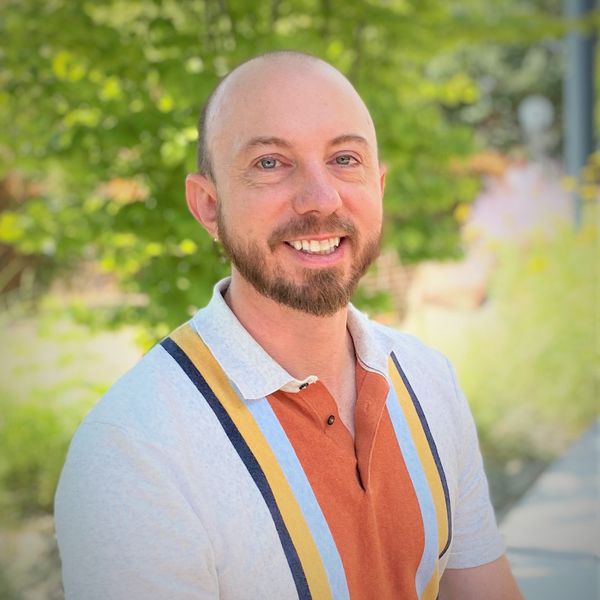
David Ferris
Expert in memoir and business nonfiction. Creating books that grow your business and change lives
About
I’m David—a ghostwriter, editor, and writing coach with a Big Four publishing background and an Ivy League degree. I've penned over 30 books -- including a few bestsellers -- for entrepreneurs, CEOs, artists, coaches, and visionaries of all stripes. I specialize in creating books that make an impact by connecting with readers on an intellectual and emotional level. Books that aren't just fun to read but which achieve YOUR personal and professional goals —whether that is increasing authority, expanding opportunity, personal healing, leaving a legacy, or all of the above. I began my career as an editor at Little, Brown and Company (part of Hachette Book Group), where I learned what makes books marketable and hard to put down. Since then I’ve helped writers at every level—from first-time authors to seasoned professionals—shape their ideas, strengthen their voice, and finish manuscripts they’re proud to put their name on. My background in filmmaking and screenwriting has also given me skills other ghostwriters lack: the ability to tell a story, whether business, memoir, or other nonfiction, in an exciting, cinematic way. Clients often tell me they value my clarity, collaboration, speed, and calm guidance throughout the process. I was born in Texas in a military hospital, grew up in Maryland, and now live in Los Angeles. I spent over a decade living overseas in Europe and South America. Outside of writing, I’m usually playing piano, exploring the city, or hanging out with my wife and son. If you’re looking for a partner to help you shape a book idea, outline it with confidence, and bring it to life in your voice, let's connect.
- Location
- Los Angeles, CA
- Experience
- 15 years
- Listed
- October 2026
- Categories
- Memoir or autobiography · Business or leadership book · Narrative nonfiction · Self-help or practical nonfiction · Other
- Specialties
- Business, Entrepreneurship, Real Estate, Personal Finance, Memoir, Screenwriting
- Languages
- English, Spanish
- Range
- $35,000 – $50,000
—
0 contracts paid in full
This number is built only from contracts paid start to finish through Notable Authors. Nothing self-reported is counted. The clients behind it are real and anonymous: a redaction bar sits where each name would be. How that works →
Services
Memoir
From $40,000You’ve thought about writing one for years. Don’t put it off any longer. Share your life story with the world. A memoir can immortalize your experiences, provide a literary heirloom for your family, celebrate your achievements, and help you remember and relive your experiences. Unfortunately, most memoirs are not well written. It is an art form that demands a professional’s touch as much as any other book. A ghostwriter takes your life experience and converts it into a narrative that will interest a wide audience.
Typical turnaround 6-7 months
The record
What this proves →Nothing here yet, and nothing on any profile yet. This site is new. A record appears when a whole book has been written and paid for through it, so the first ones are months away.
Writing samples
The writer’s own material, published exactly as written.
Business book/memoir written for the founder of a wealth management firm.Memoir or autobiography · Chapter 1: The Snowstorm that Changed My Fate · 1,128 words · 5 min read
This is from the first chapter of a business book written for the CEO of a New York wealth management firm.
Chapter 1: The Snowstorm that Changed My FateKillington, Vermont, 1969
The wind whipped down from the mountaintop and across the snowy, undulating slopes with the force of a thousand Roman chariots rushing into battle, its icy chill as sharp as the tip of a spear. The snow had started falling in the morning and hadn’t let up, as my American cousin, a few of his friends, and I sipped after-dinner cocktails in the wood-paneled warmth of the ski lodge. A full-on blizzard with no sign of abating. Normally, that might have been a welcome development during a ski holiday—at the very least, we could have wiled away the hours in the comfort and camaraderie of the lodge—but I had important appointments awaiting me back in New York. I had traveled from Paris for two weeks to find work; a narrow window in which my whole future was at stake. And Mother Nature was conspiring to keep me away.
“What are the chances of this clearing?” I asked my cousin. “I need to be back in New York for an interview on Monday.”
He smiled pityingly. “Don’t get your hopes up. Look outside! Three feet of snow already with another four on the way.”
“And how much is a foot?” I had only been in the States for a few days at that point. The imperial system of measurement was, like decaffeinated coffee, non-dairy creamer, and other uniquely American things, foreign to me.
It had taken months of networking, letter-writing, and long distance phone calls to finagle the interviews, not to mention the time and expense of trans-Atlantic travel (which was a more difficult undertaking back then). As I watched the snow continue to fall, I accepted that my cousin’s forecast was probably the right one: we weren’t getting out of Vermont any time soon.
At the first opportunity, I called the man I was supposed to meet with in New York, but he refused to re-schedule, and anyway they had other candidates to interview. It does not leave a good impression on a prospective employer when you miss the interview because you have gone north for a weekend ski jaunt, force majeure notwithstanding. The other meetings I had set up dissolved too, like melting snow.
What now? I was never one to despair or lose my cool, and I’ve always thrived on challenges, but the situation seemed dire.
I was about to learn an important lesson that has stayed with me ever since.
The Man in the Plum SuitParis, 1969
What I remember most about La Gaudriole was its rich red interior, its original 360degree mural depicting the famous Longchamp horse races of the 19th century, and the perpetual state of barely contained chaos and the pleasant clatter that prevailed inside that little restaurant: drinks prepared, orders taken, food plated, money exchanged, counted, and secured away with that confident metallic clang of old-fashioned cash registers. And of course, the conversations of a dozen voices, mingling and mixing.
The restaurant was nestled on a busy street in the 1st arrondissement, right on the gardens of the Palais Royal, close to the Louvre. My girlfriend Regine and I ate lunch there almost every day. That day seemed like any other day, but through a simple twist of fate, it would prove to be one of the most pivotal meals of my life.
We were dining with a few friends, young Parisians, like us, trying to make their way in the world, when the subject of my career plans came up.
“Have you told them yet?” Regine asked. Regine had thick black hair with bangs and dark eyes—an alluring Cleopatra look. She was always dressed fashionably, even when working all day in her atelier.
“Tell us what?” said Antoine, a friend of mine from the Air Force.
“Some exciting news,” said Regine, her eyes lighting up as they always did at the thought of a fresh challenge, a new adventure.
“You’re finally being court-martialed?” Antoine joked.
“Not yet, though there’s still time for that,” I said. “No, but seriously: you know I’m visiting my cousin in America next week. I’m going to look for a job there. Regine and I are, if all goes well, moving to New York.”
“New York! What’s wrong with Paris?”
“Nothing’s wrong with Paris. We love Paris. But there are opportunities there that you can’t find here.”
Antoine whistled and shook his head, but his grin told me he approved.
“He’s right, actually,” said the man at the next table. A young-looking forty-something Italian, he wore a thin moustache and a perfectly tailored plum-colored suit. I had never seen him before, but at La Gaudriole, most of the clientele were regulars (many writers and journalists), and the tables were packed tightly, so it was common, expected even, to banter with other patrons.
“New York abounds with opportunity,” the Italian said. “Full steam ahead there. Paris is a museum, old, beautiful, and elegant. New York is a locomotive, dynamic, fast, noisy, and dirty. What do you intend to do there?”
“Wall Street,” I said. Two words that everyone in the world recognizes immediately. Two words that convey prestige, ambition, affluence, and risk.
“Interesting. Cutthroat. But that’s where the money is made. Myself, I’m in publishing. But a good friend of mine works for [redacted], the brokerage. He’s very busy and may not have any time for you. But look him up if you’re in New York. Tell him Ranieri says hello.”
Thanks, I said, not thinking much of it, not even bothering to write down the name. There were eight million people in New York. I didn’t think any of them would want to arrange a meeting with me out of the blue. Besides, by then I already had a few appointments lined up via contacts from the alumni of my university.
“Good luck, my friend,” said Ranieri, who polished off his coffee, put on his hat (plum, like his suit), and left. I never saw him again. Nor did I know (nor he, for that matter) that he just changed my life.
At the time, I hadn’t really begun a career. A few false starts had led me from one field to another, but nothing stuck. I had completed an MBA at the main French business school, after which I taught accounting for two years, ironic because I was actually a very poor student in accounting. But no one else applied for the job, and under the tutelage of two American professors, I became proficient enough to teach others, even though my students probably had a better grasp of the subject than me.
"At the Edge of the Light." Journalism/Creative nonfiction: My experience covering the MH17 plane crash in UkraineNarrative nonfiction · 1,371 words · 6 min read
This piece was originally published by RUSSIA! Magazine.
The road to Grabovo from Donetsk is lined with time-worn Soviet block towers, hulking industrial ruins, and sunflower fields in full bloom, wide swaths of green, yellow, and grey blurred by the motion of the taxi. We are crammed five to a small car, traveling wordlessly in the fading light through the East Ukrainian back-country in the direction of Malaysia Airlines Flight 17, which was downed only hours ago. Any minute now we expect to see a tower of smoke rising above the grey-green landscape, but there is nothing. Eventually, the first sign of anything amiss appears in front: a boxy red emergency vehicle, traveling in the same direction. But its driver doesn’t seem to know where to go either.
On the radio, voices chatter gravely in Russian about the crash, until we drive too deep into the countryside and the voices dissolve into static. Night falls and we continue to follow the red vehicle ahead of us, all the way to a rebel checkpoint. The paramedics are waved on, but we are stopped. We show our press credentials to the armed rebels, but they turn us away. No press allowed yet, they say. We set off in search of a different route, winding through rough, ghostly, uneven roads, devoid of people or cars. The night gets thicker.
Just as I start thinking we’ll never find it, we turn down a dirt road past an abandoned block post and onto a narrow street that bisects two open fields, where the plane has broken up, the now-famous fields where all those lives collided with the earth. We park next to a piece of the fuselage jutting up sharply from the ground, illumined by the light of a news crew already on the scene.
As I step out of the car I’m instantly hit with a sharp, faintly nauseating odor. It smells strange and inorganic, but I’m told it’s the smell of burning flesh (or “people, that’s the smell of people,” a colleague tells me). Heavy clouds have snuffed out the moon, hiding most of the horrors I know are strewn about, but certain signs of the disaster are immediately revealed to me: in the grass at my feet, signs of the minutiae of everyday life, heartbreaking in their banality. A Lonely Planet guidebook for Bali. A Rachel Gibson paperback romance novel, translated into Dutch. A tube of Sensodyne. All perfectly intact, as if they had just been dumped absent-mindedly from someone’s carry-on bag onto the top of a hotel dresser after a long, transcontinental flight, and not out here in this field-turned-graveyard, where silhouetted insects beat their wings frantically around the lights of the rescue team, keeping vigil over the deceased.
Nearby, a few steps from the road, the corpse of a young man, stripped down to his underwear by the violence of the crash (the wind velocity, or the collision with the earth), lies on his back, face turned up to the starless sky. Death has already tinged his skin with a plasticine grey. A man about my age, or so it seems. Where was he going, who was he with? In any case, he’s alone now.
I look away, to the other side of the road, at a charred section of field about 30 feet by 40, littered with debris, smoke rising into an indifferent sky. Our driver sweeps the beam of a small flashlight across the space, and the weak light isolates pieces of the terrifying whole. Owing to both the unreality of the scene and the limited scope of the beam, it’s hard to even discern what we’re looking at, but it picks up one thing, above all, that I’ll never forget: two mangled bodies, bent at grotesque, unnatural angles, thrown together by the force of the crash, seemingly clutching each other closely as if in a morbid, terrified embrace. Probably, they were strangers in life, now fused together in death.
And so, this is how the scene reveals itself to me: fragments of a nightmare picked up for just a second before plunging into darkness again as the flashlight sweeps on. Later, I will think about how the whole experience is like that. You can look at the individual symbols of tragedy – a pink carry-on bag, a stiffened hand protruding beneath a mangled airplane seat – and understand what they mean, but the enormity of the event remains elusive, shrouded in darkness, just beyond the reach of the light.
And in a few hours, the sun would rise again, and the scene would be revealed in the entirety of its horror.
When we return the next day, the area looks almost pastoral, if not for the wreckage spread across the field. Cows moo languidly next to this little Ukrainian village the world should never have known, the one whose name is now being inked on newsprint in Tokyo and mispronounced on the morning news in Spain. Undulating fields of wild wheat stretch out toward the haze of the horizon. Rebel soldiers stand off to the side, Kalashnikovs around their shoulders, and rescue workers gather, for the moment doing nothing, apparently, for there is nothing for them to do. Only the journalists are busy today.
I look with shock at the smoldering hellscape: shirts and dresses, mangled scraps of metal, a coloring book. You think of the lives these objects once belonged to – the child who was gripping the crayon (first green, then blue) in her little hand, the newlyweds who were underlining pages in their travel book – just before the missile struck. It’s this mix of banality and disaster which undergirds the shock of MH17 – there is nothing so mundane as air travel, nothing so horrific as when it meets a violent, explosive end.
And so, too, do I think of the lives that once belonged to the bodies (and pieces of bodies) that are everywhere. The act of looking at a corpse (an experience I have never had, until today) is simultaneously horrifying and unreal: it’s hard to connect the physical remains to the lives they once embodied. Who was this person, what were they like, what would they have become, if only, perhaps, their alarm clock had failed to go off, if only the traffic en route to the airport had been worse (just this once…)?
We stay for several more hours there, grimly photographing and documenting, before the hour-long ride back to Donetsk, back through the rebel checkpoints, back through the nameless, uniform little towns and the uneven roads. We say nothing, worn down by the weight of what we have witnessed. “What was it like, how did it feel?” friends later ask me. It felt as one might expect, really. But there is another feeling stirring now, one that is more surprising: the faint but exuberant joy, the joy that belongs only to the living. A joy tinged with guilt but still bright, the joy of drawing another breath and exhaling, the joy of watching each passing blade of grass through the car window, of enjoying the sappy Russian pop music on the taxi radio. We who have come to Donetsk to cover the increasingly brutal civil war ravaging this land all recognize the perils of our work, acknowledging the unlikely but real possibility we might not make it out alive. Yet here we are, on the ground, where the sound of distant mortars carries over the trees, safe, safe, for now (and maybe forever, or at least, I hope, until we are very old). Reminded of how quickly and unexpectedly life can end, and in so many ways.
So, home, home (at least, the place we call home for the moment, in this war zone we foreigners will all leave, sooner or later). We drive. The sunflowers stretch higher toward the sun, the old Soviet factories bloom with another layer of rust, the summer gets deeper, the worldwide mourning has already begun. Perhaps it is not fair to be alive, but it is a fact, one of the few that make sense now, and we hold it tight in the palm of our hand, and watch the landscape roll by.
Selected credits
Self-reportedProvided by the writer. Most ghostwriting is confidential, so we cannot confirm these and do not present them as fact.
I did not ghostwrite this, but I provided writing coaching, developmental editing, and line editing.
$35,000 – $50,000
Contact David