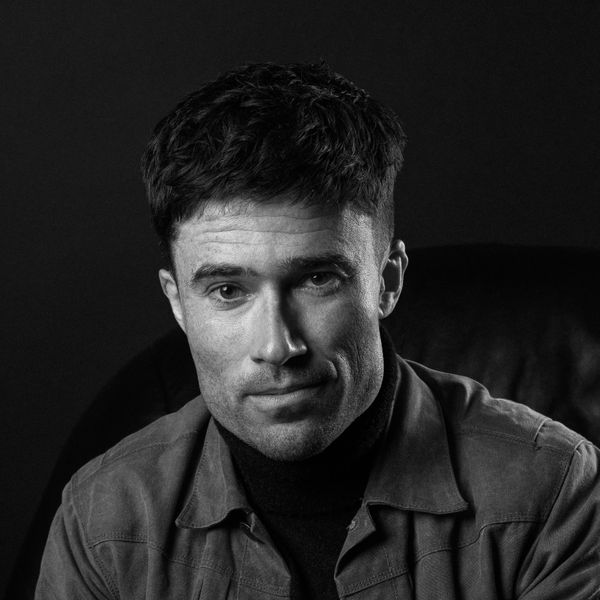
Charles Daly
I help authors "go there" with tough topics
About
Charles Daly, “Charlie,” is a ghostwriter, developmental editor, and book coach working with memoir and non-fiction. He helps authors “go there” with difficult topics. He is the co-author of I Will Follow You Anywhere: The True Story of the 9/11 Responders Who Took on Congress by John Feal with Charles Daly, foreword by Jon Stewart, Crush Depth: How One Woman Made Navy History Beneath the Waves by Marquette Leveque with Charles Daly (Potomac 2027), and Make Peace or Die: A Life of Service, Leadership, and Nightmares (featured on Jocko Podcast). He has worked as a developmental editor on bestselling military memoirs, including From Lawyer to Warrior and Civil: Life After the Foreign Legion. His travel writing and long-form journalism has appeared in The Boston Globe, We are the Mighty, Kōkatat, and Thought Catalog. He lives in a cottage on the Atlantic coast of Ireland with his wife, Dominique Müller, a Swiss crime novelist, their young son, and a black cat named Serge. He has also worked as an English teacher in Korea, a surf instructor, and a defamed Stop & Shop cashier. When he’s not writing, he’s exploring the coast in small boats or on call as a maritime first responder.
- Location
- Ireland and Cape Cod, Massachusetts
- Experience
- 9 years
- Listed
- October 2026
- Categories
- Memoir or autobiography · Narrative nonfiction · Self-help or practical nonfiction · Book proposal · Other
- Specialties
- Military, adventure, trauma, survival, stories of rogues and outcasts
- Languages
- English
- Range
- $35,000 – $90,000
—
0 contracts paid in full
This number is built only from contracts paid start to finish through Notable Authors. Nothing self-reported is counted. The clients behind it are real and anonymous: a redaction bar sits where each name would be. How that works →
Services
Memoir Ghostwriting
From $35,000Ghostwriting the manuscript of a full-length memoir based on interviews with the author and extensive research.
Typical turnaround 6-12 Months
The record
What this proves →Nothing here yet, and nothing on any profile yet. This site is new. A record appears when a whole book has been written and paid for through it, so the first ones are months away.
Writing samples
The writer’s own material, published exactly as written.
I WILL FOLLOW YOU ANYWHERE: The True Story of the 9/11 Responders who Took on CongressMemoir or autobiography · Chapter 8: Buy a Treadmill · 1,125 words of 80,000 · 5 min read
Marble is an unforgiving surface. After a decade of walking the halls, my body is breaking down. I don’t complain in front of the guys, but I’m hurting. Over the years, I get both knees done, both hips, both heels, ankles, tendons, plantar fasciitis, I get my jaw reconstructed, but the most painful procedure of all is a hernia repair. Phantom limb syndrome tickles and burns constantly. I don’t take pain meds. I won’t ever. I get back in the gym as soon as possible after each operation, working my upper body with my leg in a boot. I try to stay ahead of further breakdown and old age as the years drag on with no sign that I will ever be able to retire.
I estimate my total driving miles to get this bill done as roughly three laps around the earth. Rich Palmer, one of my team leaders, wears a Fitbit and finds that we average twelve miles of walking every day on these trips. On the first day of a trip, we’ve got the energy of a bunch of eight-year-olds. The first night, we get together for dinner and have a beer, and we’re all in bed by ten o’clock. Day 2 is when it’s clear these are a bunch of sick people. On the second night, we’re all asleep by eight.
One time, outside Longworth, Jon Stewart needs to sit down. We’re both tired and battered from days of walking.
“Welcome to my world,” I say.
“Your world sucks.”
My cartilage and tendons aren’t the only parts strained and torn by long miles in the halls of government and nights away on the road. Eventually, the work claims my marriage of seven years. Marzena and I became like roommates, and there was just no room in my life with all the space taken up by the bill, the trips, and the constant grieving. At the time, neither one of us knew enough about the effects of PTSD to see what it was doing to my relationships. Sleep is to rest my eyes between meetings. The bed is for spreading out files and paperwork. Treating this like a military operation is effective, but there’s a lot of collateral damage.
I remind my teams constantly that everyone is expendable for the sake of what we’re trying to accomplish, and I have to accept that the same is true for my own personal relationships. It’s a credit to her commitment and character that she stays involved with the movement after we go our separate ways and remains on the board of the park in Long Island that we built to honor the responders. I’m okay with being a shitty husband, but I will never allow myself to be a shitty friend.
Everybody hurts. We all make sacrifices. We’re all going to die someday. But you don’t dare complain about these things or let in the fear when you’re lucky enough to know a man like Ray Pfeifer. Because if he has no complaints, how could you?
As the cancer eats his leg, he starts walking with a cane. Agony with every step.
“Can’t complain” is all he ever says when you ask how he’s doing.
“It’s okay, Ray,” Stewart will insist, “you can complain.”
He lags a little behind the group as the disease progresses. The doctors put a steel rod in his leg. The cancer grows and puts so much pressure on the medical-grade steel that the rod snaps. If that hurt, Ray never says so. The only thing that bothers him is that he’s slowing down the group. But cancer is no respecter of attitude or willpower. It will kill him the same way it kills the people who moan about it. As the disease eats his bones, Ray takes to an electric scooter that is given to him by Sandra McGee, whose husband, John, died of 9/11 brain cancer. The wheelchair is my idea. Ray doesn’t want it. He’s determined to keep walking, no matter how slowly or painfully. But he’s starting to make us late. He’s missing the tight turnarounds between meetings. He isn’t going to make any allowances for his own comfort or welfare, but he cares deeply about the group. It’s his thoughts of us that keep him going.
“Ray,” I tell him, “you have to get in the scooter; you’re slowing us down.”
“John, I’m embarrassed. I can walk; I’m just slow.”
“Then you can’t go to DC. We can’t wait up for you, and we can’t be responsible if something happens. Right now, you’re hurting us.”
He’s devastated, but he doesn’t realize the scooter is a promotion.
“Ray, I want to make you the face of this movement. When people see you coming down the hallway in a scooter, on oxygen, with stage four cancer… You’re going to make them blink. They’ll show us who they really are. You’re going to move mountains.”
He eats that up.
And that’s exactly what happens. Ray was always phenomenal, but in the chair he’s a force to be reckoned with. A man of simple tastes, Ray has only one demand: All he wants is for these representatives to look him in the eye. He buzzes down the hall in his scooter, dressed in FDNY Class A’s, and when he encounters a member of Congress, he won’t let them pass until they look him in the eye.
Jon Stewart is his frequent sidekick. I paired them up. In one memorable encounter, captured by the film crew making No Responders Left Behind, Stewart chases Deb Fischer of Nebraska down the hall into an ABC camera crew, and then, as he put it, Ray comes around the corner in his chair “like John Wayne riding in on a horse.”
In his eulogy to Ray, Stewart remembers what it was like to be the Tonto to his Lone Ranger.
"We played “good cop/ bad cop”… I was the bad cop because I couldn’t believe the disrespect that was being shown to this man and to the other heroes of 9/11. We would go office to office, to senators who would tweet out “#NeverForget, the heroes of 9/11.” And yet, here was this man who was suffering from a stage 4 cancer because of that day, and they wouldn’t look him in the eye. They wouldn’t be in the office. And I was losing my mind. But Ray just sat, resolute. He knew that in this situation, he was in the right, and he didn’t have to show histrionics, he didn’t have to yell, he didn’t have to scream. He sat, his body becoming as big as a boulder. People wouldn’t get by until they looked him in the eye. And it was magic."
Selected credits
Self-reportedProvided by the writer. Most ghostwriting is confidential, so we cannot confirm these and do not present them as fact.
By John Feal with Charles Daly, foreword by Jon Stewart
By Marquette Leveque with Charles Daly (Potomac, 2027)
$35,000 – $90,000
Contact Charles